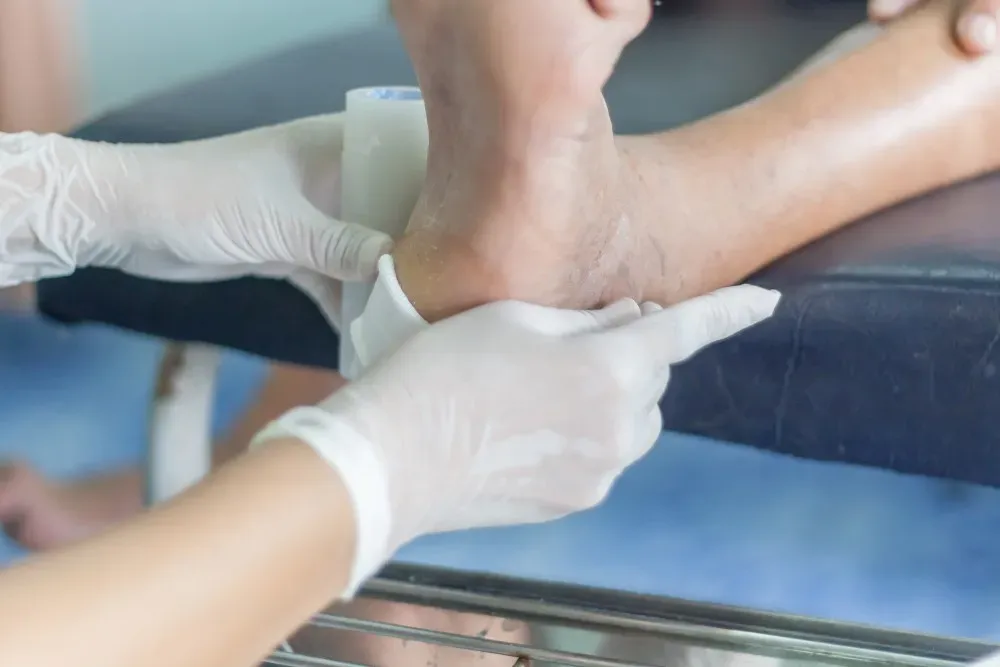
Diabetes and Foot Health: Early Signs of Neuropathy You Should Know
November is Diabetes Month. It is the perfect time to focus on your health, especially your feet. At Arizona Foot and Ankle Medical Center, Dr. Kyle Durfey and our team help patients in Laveen and Chandler, Arizona, protect their feet from diabetes-related complications.
Among the more common concerns we treat is diabetic neuropathy, a type of nerve damage that often starts quietly. In fact, the American Diabetes Association notes that up to 50% of diabetic neuropathy cases can be asymptomatic. This means you cannot always rely on pain to tell you when something is wrong.
Early signs of diabetic nerve damage
Early signs of nerve damage often include burning, tingling, or a "pins and needles" feeling in your toes. These sensations usually start at the tips of your toes and can slowly move up your feet.
You might also notice that your skin feels unusually dry, or that your heels are cracking. This happens because damaged nerves stop telling your sweat glands to keep your skin moist. At our offices, we evaluate these early changes to prevent minor issues from becoming serious wounds.
Why does silent nerve damage put your feet at risk?
Silent nerve damage puts your feet at risk because it suppresses your body's natural pain alarm. Losing this protective feeling means that having a tiny blister or a small pebble in your shoe can quickly turn into an open sore.
According to a study in Biomedicines, the lifetime risk of developing a foot ulcer is 19% to 34% for people with diabetes. Our team offers specialized wound care and custom orthotics, protecting high-pressure areas on your feet. Our goal is to keep you moving comfortably and prevent these complications before they start.
Check your foot health at home
You can easily evaluate your foot health at home by carrying out a quick touch test. For instance, a clinical review published in BMJ Open analyzed the effectiveness of the Ipswich Touch Test among 1,162 adults living with diabetes.
In this test, a caregiver lightly touches the tips of your first, third, and fifth toes for two seconds. The study found this simple test has a 0.96 specificity for identifying loss of protective sensation. Although this is a great tool between visits, it does not replace your annual professional exam. The American Diabetes Association recommends that adults with type 2 diabetes get annual assessments for neuropathy.
Our team at Arizona Foot and Ankle Medical Center is here to help you stay active and healthy. Should you notice any changes in your feet, do not wait for pain to start. To schedule your annual foot exam, contact our team at our Laveen or Chandler office.